Showing posts with label Flanders. Show all posts

Sunday, December 6, 2015

I visited Ghent on a rainy day and I (still) liked it!

You should never draw expectation on Belgian weather... The other day, as I was walking to the train station, I realised it going to rain heavily for days. But I really wanted to visit Ghent, so here's what I saw.

Lost? Here's how to get there


From the Gent-Sint-Pieters station, take the 1-tram to Korenmarkt (the ticket machine isn't clear at all, so ask a passerby to help you!) and in about 13 minutes, you'll be in the historical centre of Ghent. If you really don't like walking in such a weather (or if your umbrella broke), you can stop earlier on the way, at the Ghent city STAM museum (Bijloke site) to see the latest big exhibition dedicated to cultural heritage.

In any case, take your train as early as possible, because a lot of cultural attractions close in the afternoon (around 5 or 6 pm)! If it says '6 pm' on the flyer, expect it to close at 5.30 already!


'Cuberdon' candy being sold on the street around Korenmarkt

Ghent is the kind of city you could equally see yourself visit, go shopping to or live in. The authenticity and cuteness of the buildings will make you (almost) forget that you're getting wet and freezing like an icecube!

Overwhelmed? Here's what you should see first


A highlight of your visit will be the magnificent Ghent-Terneuzen Canal, which looks very similar to the stream of little sister city Bruges. You can take a boat to visit from the stream as well and it's just a little less fairy-tale and tourist-oriented but still enjoyable.


The other must-sees are the Gravensteen (Castle of the Counts) (1) built in 1180 by Phillip of Alsace, the Belfry (2), a UNESCO World Heritage, the St. Nicholas' (gothic) Church (3) from the early 13th century, and the City Hall (4), a 2010s project.


Ghent isn't bad at all during the day, but it will literally light up and shine (like a phoenix) in the evening! In the winter the sun goes down around 5 already but you can still go shopping and enjoy such a romantic sight. Although you are still soaking, I promise the rain will become almost invisible!

Feeling 'hip'? Have some fun


The city has a quite big shopping area around Veldstraat that includes the usual brands. You can also find a whole bunch of vintage shops or markets around the town. People in Ghent tend to like giving a new life to old stuff from their attic... Usually these shops are indoors, which is cool. Don't expect finding very cheap items though: this is still Belgium!

Ghent is also about preserving and revitalising old monuments and old walls. This can be achieved through urban art. In the centre, you will also find the quite discreet but famous Design Museum in front of the canal. Maybe you'll find interesting ideas for your home!


Perfectly integrated mural fresco

If you're bored at night, you can hang around the nice bars of the town. There is a bit of everything, so you can easily find the one that you'll like and enjoy a nice Belgian beer.

You can also find concert halls or bars in which bands play every evening. Actually some of the most popular Belgian bands, like Soulwax, Balthazar or Das Pop, come from Ghent! If you prefer jazz, the city hosts many concerts and has a jazz festival in July (more info: Gent Jazz).


Belgian beers and trolls in a bar of the centre

A last remark on accents...


Last thing, if you're learning Dutch, don't pull a face if you don't understand everything they say. A lot of people will be from West Flanders and have the strangest accent you'll find in Belgium (some people consider it as a separate language), for example they call the city "Hent". Most others will use a proper Ghent accent, which has some peculiarities partly due to a long lasting French influence on the city. So listen carefully and don't hesitate to tell them you're not a local. Most often they'll switch to English or French.

Monday, October 12, 2015

A "Marginal" Triangle in Flemish Brabant?

Leuven is widely known to be the main city of the Flemish Brabant province. It has a century-old university campus - perhaps it is the Belgian "Oxford"? - and many wealthy youngsters come from all over Flanders and the world to study there. Yet, an Eastern part of the same province, between Tienen, Diest and Aarschot, is colloqually named "de Marginale Driehoek" or "the Marginal Triangle" in English. A legend says that Napoleon gave the name to the region. According to it, before the Battle of Waterloo, the emperor left a number of soldiers there when they were not "capable" of doing much.

"Marginal Triangle" on a map next to Leuven


Nowadays people still associate the "triangle" with the word "marginaal", which does not translate only literally into "marginal". Rather it is used for tasteless and stupid people, who often severly lack culture, education and a job... Stereotypes depicts them as football and car "pimping" fans, who love loud techno music and showing off clothes of a famous brand (basically the equivalent of "chavs" in England).

As a result, people in Leuven and others regularly make fun of the region, being considered as low class, which is often untrue! According to statistics (source), people in the region are not necessarily less well educated or employed, but some would argue that "marginality" has more to do with culture and lifestyle than income or education...

Flemish tv-show De Ideale Wereld (VIER) has recently made fun of these people through parody videos. In one of them, the comedian Luc Haekens pretended to be a journalist broadcasting the visit of the Chinese President in Tienen. A big limo arrived on the city centre and a black guy wearing a Chinese hat and a wig was playing the Chinese President! Although this all didn't really make sense, people still acted as if it was normal!... It didn't surprise anyone either that the "Chinese President" had a perfect Flemish accent while speaking Dutch! Watch the video.

In another parody, the same comedian publically apologised to all people in Tienen about what he did last time. He used the occasion to make people claim their pride in the city of Tienen... but not in the best way! Haekens basically pushed people to say silly sentences while innocently doing strange things. A woman put her feet in a public fountain, a cyclist got filmed upside down with his bottom facing the camera, etc. Not the best way to bring some dignity back to the so-called "Marginal Triangle"! Watch the video.

Special thanks to Rien for the good idea! ;-)

Tuesday, September 29, 2015

English rap in Flanders: Woodie Smalls and Coely

Hiphop and rap music has become a blooming genre nowadays, being performed all over the world and representing various communities, and in a previous article, we focused on Flemish rap and so-called "Nederhop". Two (young!) artists recently attracted my attention. Why? Because they were using American English and weren't even born in the US but in Flanders!


Woodie Smalls, whose real name is Sylvestre Saluma, was born in Sint-Niklaas in 1996. He started rapping in his early teenage and released his first song "Champion Sound" this year (he is now 18!), coming together with an EP called "Soft Parade", with the help of Dutch producer Thovobeats.

The video features him in a typically Flemish village (I assume) in the company of his cousin and friends. Flemish radios such as Studio Brussel (mostly indie music), MNM and JimTV directly broadcasted it. It also reached listeners in the Netherlands, France and Australia.

His lyrics are in English and with a "Black American" accent but his rap is about his life here in Belgium, a whole different lifestyle, far away from the usual "gangsta, diamond rings and bitches" type. He also chose humour for the title of his second track "About The Dutch".

But wait... Woods was not the first Flemish rapper to use English. Three years ago, Belgium discovered Coely! Born in 1994 in Antwerp, Coely Mbueno recorded her first track "Ain't Chasing Pavements" with independent record label Beatville (2012). She came by as a relevant ambassador of female rap, but she also proved that she could sing. National radios embraced her performance and Studio Brussel even elected her as their "Hotshot".


Her first EP "RAAH The Soulful Yeah" also includes the singles "Nothing On Me" and "All I Do". She changed her looks for something more androgynous and revealed a more feministic mind ("(...) the world surrounding me is mostly run by men, but we're taking over!"). She then graduated in 2013 before starting to tour in various festivals of the Benelux. Having attended one of her concerts, I found her very generous with the public and full of energy.


Thursday, January 15, 2015

Beer pipeline to supply brewery in Bruges

If you haven't been to Bruges yet, it's a beautiful medieval city that worth being visited at least once. Resembling a Northern Venice with canals replacing streets, it has been classified as UNESCO World's Heritage and is probably one of the most visited cities in Belgium... perfect for a romantic trip with your lover! Recently, a brewery found a solution to problem of lorries transiting through the old town with an original idea.


Bruges's beautiful canals

Famous for its beer Brugse Zot, one of his most emblematic breweries of Bruges, De Halve Maan ("the Half Moon") announced its intention for 2015 to install a pipeline in the undergrounds of the city... The first pipeline with beer ever invented!


What it might look like

The pioneer construction will probably cost a lot, but it will be an eco-friendly solution to limitate sound and air pollution in the old city. Every year around 500 lorries transit through Bruges in order to provide breweries with beer. Instead, a 3-kilometer long pipeline will connect the brewery (and maybe others) to a bottling plant outside Bruges, reducing by 85% the number of lorries in the beautiful streets. It will take around 10-15 minutes to get the beer out and the steel tube will be high-quality and safe, guaranteeing no leak. One more reason to get a drink in this splendid town!


Bruges during Christmas time

Thursday, January 8, 2015

Flemish Epiphany is a sort of Halloween

In Belgium, Epiphany (called "driekoningen" or "fête des rois") is celebrated on 6th January or at least at the beginning of this month, like a logical conclusion to Christmas time, when three "kings" arrive to the crib where Jesus was born, coming from the East and following a star in the sky. The word "kings" is probably not appropriate to qualify those three men, but they were rather scientists or wise men, who had knowledge of astronomy and said they could predict the future. Their name was Caspar, Melchior and Balthasar and they brought expensive gifts for Jesus, whom they considered to be their new king: gold, incense and myrrh (a sort of ointment).

In the whole country, people on that day eat a pie called "koningentaart" or "galette des rois", which is usually made of almonds and has a figurine or a black bean inside of it. The tradition is that the one who gets the figurine or black bean in their piece of pie becomes the king (or queen) for the day. It is mostly feast for children, so parents usually try to make their child get it, so that they're happy for the day. As a reward, one can get a paper crown and can elect a queen or a king, giving them the other paper crown.


Until this week I didn't know that Flanders actually had a distinctive tradition for children on the day of Epiphany, which it shares with other Germanic-language regions but not with Wallonia. Children are dressed as "kings", often carrying a lantern or a star, and, in groups of three (like the three kings), they go from house to house, a bit like for Halloween, and ask for candy or "cents". But instead of simply saying "trick or treat", they have to sing songs specially invented for the occasion, like this one:

"Driekoningen, driekoningen
Geef mij een nieuwe hoed
Mijn oude is versleten
Mijn moeder mag het niet weten
Mijn vader heeft het geld

Op de rooster geteld."

"Three kings, three kings
Give me a new hat.
My old one has been worn out,
My mother can't now about it
My father has counted
The money on the grid."


Wednesday, December 3, 2014

Lead singer of Flemish band Gorki passed away

©PHOTO NEWS

Luc De Vos, lead singer of Flemish rock band Gorki (known earlier as Gorky) passed away on Saturday 29th November. He was only 52 and was born not far from Ghent.

The band Gorki was made famous in Flanders and the Netherlands with the song Mia in 1991. Their lyrics, in Dutch, were generally poetic and told stories that felt close to the heart of every listener.


In their first album in 1993, the band sang the song Hij Leeft ('He Lives'), which was used as the name of the whole album.


As a hommage to Luc De Vos, Flemish synthpop band SX recorded an English version of the song, adapting it to their own style.

Friday, November 14, 2014

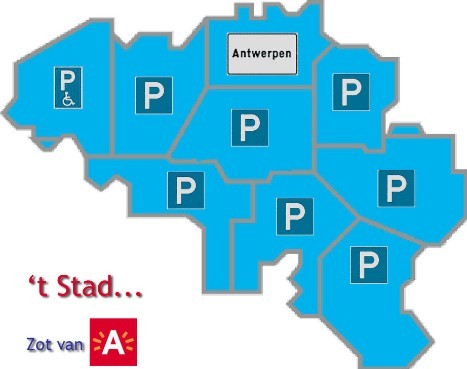
A new name for the province of Antwerp?

Today, an idea surprised all newspapers readers! The parties of the federal majority in Flanders (N-VA, CD&V and Open VLD) suggested a change in the name of the Antwerp province (called after its capital city)... into "Central Brabant" (Midden-Brabant in Dutch)!

Why "Central Brabant" and not "Northern Brabant"? Actually, there is already a Northern Brabant in the Netherlands, constituting the Northern part of a former Duchy of Brabant, which also included a Middle (Antwerp province) and a Southern Brabant (Flemish and Walloon Brabants... and Brussels). Some people see this name change as a good idea to boost collaboration between the Dutch and Flemish Brabants. These regions share the same dialect group called Brabantian (which today seems to be used in media as a sort of standard Flemish dialect)...


What it would look like if they changed the name of the Antwerp province

Anyway, the suggestion was made because there is too much confusion between the city and the province of Antwerp. People don't seem to identify clearly with its capital, a big city with a powerful identity, which takes all the attention in the province, while people from Kempen, Rupel, Mechelen, etc. apparently don't feel very "Antwerpian". By contrast, East Flanders is already not called after its capital Ghent, and people in some part of the province don't identify themselves to it either. Ultimately, a reason for the change in name is because the three parties wish to give big cities such as Antwerp and Ghent more autonomy from their province.

The news caused an uproar on the web and some people think it is part of a series of pointless changes from a goverment that wants to ultimately separate Belgium in two countries. Others see it as a way to encourage a re-annexation of Flanders to the Netherlands, as was the larger Brabant territory. Well, there is also a Dutch and a Flemish Limburg, but... I don't think it can happen, because Flemish nationalists are usually proud of their region and very few actually see it as a part of the Netherlands. A lot more think this name change doesn't really "change" anything, but it would have a cost and there are more important matters (especially economical ones) to be debated now. Liège and Namur are also both city names and province ones, and they're pretty confusing too, but it doesn't seem to matter to anyone...

The idea was already provided by far-right party Vlaams Belang in 2008, but didn't go further on. It will have to wait until 2019 for the legislative elections, because you need to change the Belgian constitution in order to achieve it...

Saturday, January 18, 2014

First Flemish TV-show entirely in English

Today I came across a TV-show that really reflects Flemish pride and proficiency in English. The project I'm going to talk about is quite similar to this blog, but it only focuses on Flanders, rather than the whole country.

In September 2012, the Flemish public broadcaster VRT decided to create a TV-show intended for expats in Flanders. Being aware that not that many expats could speak Dutch, they created for the first time in history a TV-show entirely in English (with subtitles in both Dutch and English).

Fans of Flanders is a weekly programme with presenters who all speak an excellent English. The goal is to make people (expats or Belgian people themselves) learn more about Flanders and the most quirky things going on in there. The show focuses on Flanders but also includes Brussels, although the city has a majority of French speakers, because it is often the place expats choose to settle in and probably also because the VRT premises are located in Brussels. The French-speaking community is left out for once.

The programme mainly describes how quirky Flemish people can be, but also tells you about interesting places to visit and provides interviews of expats on what they think of Flanders (in the sequence 'Expat of the week'). All of this is made with a lot of (Flemish!) humour and may also depict the weirdest sides of the region (e.g. the irrationality of the garbage bag system). Also, typical Flemish expressions and words are presented by a journalist.

Actually, Fans of Flanders is primarily a website with 'funny' videos and all the content is first published on the internet before being broadcasted as a full-shaped TV-show. The VRT makes use of social networks, polls and blogs a lot. As a less recent project, the same broadcaster launched a Flemish online magazine all in English called Flandersnews.be.

Hopefully one day the French-speaking community will do the same... or the same will be done to introduce the whole country to the world...

Spread the word!

Saturday, October 26, 2013

Music: Flemish reluctant to listen to their own language

Here is an unfortunate fact about Flanders... Flemish youngsters listen less and less to songs in Flemish! In recent TV-shows like Idool or The Voice van Vlaanderen, almost all artists sang in English, some tried in French too, but the only two songs in Dutch were bashed by the jury. This may be the symptom of a lack of self-confidence among the Flemish. This article will show how the only genre in which Flemish language is still successful is hiphop!

Some Flemish bands have become famous worldwide. They're creative and, in the manner of Scandinavian musicians, they are good at singing in English. In that way, bands singing in English constitute most of current Flemish musics. For example, Hooverphonic, Selah Sue, K's Choice or Soulwax, have made the Flemish music scene as what it is today. Flemish people are often "musicoholic" and have quite ecclectic tastes... Studio Brussel, a Flemish indie radio, also a branch of national broadcasting VRT, is a perfect showcase of what Flemish youth listen to today.

A longlasting tendency in Flanders is to listen to French music ("chanson française"), perhaps because French used to be the only official language in Belgium and it had prestige. Did you know that Jacques Brel's family was Flemish? Probably not, because he only sang and spoke French on TV. Today, young people listen to chansons a little less (maybe because learning French is not considered as enjoyable), but some artists like Stromae, from Brussels, hit the charts in Flanders and sing in French. A few Flemish artists have sung in French too: Arno (rock), Axelle Red (pop-jazz), Vive la Fête (electro) or more recently dEUS (rock). All of them are famous in both linguistics communities today and youngsters like them.

Vive la Fête

Let's talk about songs in Dutch or Flemish dialects that people listen to nowadays. Last century saw a revival of folk musics from Flanders (maybe in link with the rise of Flemish nationalism). These songs, called today "schlagers" (a German word meaning "hits"), are often sung in dialects. Young people rarely listen to them, but they may enjoy them at carnivals or folkloric festivals, in which everyone drinks beer and dances. Otherwise, it sounds a bit too old-fashioned.


 A parody of Flemish slagers

Next, we find a few pop-rock bands that have songs in Flemish, like Clouseau, De Kreuners, Gorki or De Mens. Some of their songs are actually quite cool. Yet, there are not a lot of them and they are getting a bit outdated, as they are to be classified as 80s or 90s bands. Today, some of them still release songs, but they are not as famous as they used to be anymore.


De Kreuners (80s band)


Finally, as a matter of fact the music in Flemish that youngsters listen to the most is actually... hiphop! Actually, rap has always been about what's happening in your own town and it has to be very slangy, so that it is easier to write rap lyrics in your own language. That's why young Flemish people still enjoy hearing their language in rap songs. Dutch hiphop, also called "Nederhop", is quite famous in Flanders, with bands like The Opposites or De Jeugd van Tegenwoordig ("nowaday's youth"). Yet, some Flemish rap bands also gain a regional success, such as Tourist LeMC (Antwerp), Safi & Spreej (Mechelen), 't Hof van Commerce (West Flanders), etc. Their songs, like schlagers, often have their lyrics in Flemish dialects, and it is probably through the hiphop genre that you can learn the most local phrases, mixed with English or French catchphrases.

Safi & Spreej
Did you like these artists? Share the article to make them famous!
You can also suggest me other nice Flemish artists!

Tuesday, December 25, 2012

Bicycle races are coming your way

As a regular bicycler rider in Wallonia, I was often disappointed by the lack of involvement in this sport in my city, i.e. the very few people who actually use their bike to go to school/college/university/work and who prefer being stuck in a trafic jam at rush hours or pay their abonnement to the local bus company, taking the risk of getting late or being surrounded by loud smelly weirdos... Also, the lack of bike lanes and the poor awareness of bikers by car drivers and pedestrians makes the business very dangerous and unpopular in Wallonia, even though some city companies and associations are trying to introduce this eco-friendly transportation.

This is not the case in Flanders and the Netherlands (maybe speaking Dutch turns you automatically into a bike-lover...), where each city center is swamped with bicycles. There are thus more bike lanes and awareness of bus and car drivers, who drive more carefully and often leave way for bikes (too much sometimes). De Lijn (Flemish bus company) often lowers its abonnement price, maybe because buses are not as popular as in Wallonia or as a general attempt to make the city less polluted. And let's be serious, "fiets" (bike) clearly keeps them fit! Know what I'm sayin'?


Bikes on a normal school day in Flanders

However there are some bad points to be noted with this massive use of bikes. As students often use them even when they could walk without problem from a place to another (especially when the city is small), not all of them are very careful while riding, which make them become more dangerous than cars. Indeed, they often ride in pedestrian places, not giving a crap about people walking. That's why you need to be careful when you walk to avoid being hit by a bike, but also when you ride, because policemen (often on bikes themselves) distribute fines to careless cyclists, so don't forget your lights at night and respect the highway code. Also, it is often difficult to find a park place for your bike, so you'll often have to let it stand in the middle of the pavement with a padlock, which is not so safe when you know that it has become a tradition in Flanders to steal wheels, lights or saddle, especially when you've been stolen yours.

Saturday, December 22, 2012

Flanders' "je ne sais quoi"

Although a lot is said in the media about Flemish people hating on the French-speaking community and feeling the need for autonomy, a lot of Flemish people will tell you that they still want to be part of Belgium and that they have French-speaking friends. A lot of them also speak a very good French and works in Brussels. Also, Flemish dialects are full of French influences, even in every day conversations. The opposite is also true, because French-speakers tend to use Flemish words as well.

Some common Belgian lexicon (be-fr, be-nl, be-fr/nl):
  • Voilà : Here it is, there you go...
  • Salut - Salu(utjes): Goodbye (or hi)
  • Allez: 1) Okay, like, kind of... 2) Come on!
  • Ça va?: Are you okay? How are you?
  • Kot: Student accommodation
  • Busé - Gebuisd: Getting low results at school
  • À volonté: As much as you want (in a restaurant)
  • Merci(kes): Thank you
  • Bon: Well...
  • Bourgmestre - Burgemeester: Mayor
  • Friture - Frituur: Shop where Belgian (!) fries are sold

However, the last century saw a lot of big changes in the countries that altered the perceptions of the different communities. First of all, Belgium used to be officially monolingual in French. The reason was that most of the rich families in Wallonia and Flanders spoke French, although the rest of them spoke dialects of Flemish and Walloon (a cousin-language of French). Also, Wallonia was the wealthiest part of Belgium at first, due to a massive industrialization and mining (that's why you will find a lot of Italian miners' offspring in Wallonia, including Prime Minister Elio di Rupo!). Afterwards, this industry faded away and unemployment rose up in Wallonia, while Flanders was becoming more and more wealthy. 

Nowadays, Dutch is officially used and mastered by (almost) all Flemish people and their area is much richer than Wallonia. Therefore, a lot of them want more autonomy to have their own tax system, so that they won't pay for the poor... I also have to mention that Brussels was populated by a lot of rich families from Flanders and Wallonia who spoke French only and a lot of Walloons found a job there and were there to stay. This is why Brussels is stuck in the middle of Flanders but most people only speak French.

This odd history has left a lot of stereotypes in the country. In caricatures, the Walloons are seen by Flemish people are stupid, lazy workers, who like to go on strike and who are socialist, just to make Flemish people pay for them. The other stereotype is that Walloons can't speak a foreign language properly (which is often true, unfortunately, except when you get educated in Linguistics haha). The Flemish may see Brussels as a place full of Walloons and foreign immigrants, and not as enjoyable as, say, Ghent or Bruges...

Accents of Flemish stereotypes

Actually each city has its own dialect in Flanders and it's pretty easy for a Flemish to tell which part of Flanders someone else comes from. Also, each city has its own stereotype... Here's a small list of them...

The biggest city in Flanders is Antwerp. That's where you'll find all the concerts, shops and spectaculars. It is also the place where Bart de Wever, the most famous anti-Walloon politician is mayor. As a consequence, the Antwerpenaars are generally perceived by the rest of Flanders as arrogant and too proud of themselves and their city. 

Vision of the country as an Antwerpenaar

Another part of Belgium which is full of foreign tourists is West Flanders, known for its windy beaches (Oostende, De Panne, etc.) on the North Sea. It is also the closest place to France (actually there's a small part of France called Flanders and which used to speak West-Flemish). In general, this place is considered to get so many rich people from France or England that its people become rich themselves (note that the "wealthy French tourists" and people will make an effort to speak French to them, by contrast with the "poor Walloons"). West Flanders is also known for its accent, in which all Gs sound exactly like Hs. As a consequence, a lot of Flemish people find it hard to understand them. An example is Alex Agnew, from Antwerp, who likes to make fun of them in his sketches.


Agnew comparing the West-Flemish to potatoes (in Dutch)

The third stereotype is about people from Belgian Limburg (not to be confused with Maastricht in the Netherlands). They are often seen as the poor part of Flanders, with people who don't actually master Dutch but still speak their dialect (Limburgs), which sounds pretty much like German... Also, slowliness is typical of this dialect, in which one word has a different meaning if it's pronounced slowlier!

I would be really grateful to any Flemish who could provide me with more stereotypes on the different cities in Flanders, but those were the ones I heard the most, as most of my Flemish friends are from those places.

Why the Flemish are not going Dutch

As far as I know, it is easy to distort stereotypes by simply showing that the more you dig into the selected population, the more you find sub-stereotypes, and finally an incredible diversity of people. The French often see Belgians as one and the same entity, as a blend of Belgian stereotypes. You will often hear them refer to us as the "fat Belgians", make nonsense jokes about us showing that we are stupid, our accent is funny/ugly and we basically spend our life eating "French" fries... Also some people in the world think of us as deceitful and arrogant, like Hercules Poirot... The following video is a compilation of anti-Belgian jokes, which someone made on Youtube:


This is why I decided to write articles on my blog about... more stereotypes. This time, instead of looking at what the world thinks of Belgium, we'll see what all parts of Belgium think of each other and the rest of the world. Even in a small and peaceful country, you can get so many distensions... In these articles, I will focus on Flanders, how it distinguishes from the Netherlands and the rest of the country, and I will also explain how each place in Flanders has its own stereotypes.

Just because they speak Dutch (or a dialect related to it) doesn't mean they're Dutch. All of them will tell you that! Also, even when they speak Dutch, the difference between those two people is clear... Just listen to them talking and you'll notice that in Netherlandic Dutch, the G/CH are pronounced rough and coarse, as if it was Arabic. Rather, Flemish Dutch has a softer sound for those letters, which may approximate a plain English H. This is one of the differences (there are a lot more actually) between the languages of these two communities. I will also mention the fact that orally Flemish Dutch contains much more French expressions, which you will hear over and over. 

But the distinction is not just linguistic, it is also cultural (at first, Belgium separated from the Netherlands because it was the Catholic part of it, while the Netherlands were Protestant). The two will get along easily like cousins, but they will never be twins. In general, Flemish culture is about acting with restraint. When something goes wrong, you can't say it in a straightforward manner, because it might sound rude. On the contrary, Dutch people say directly what the trouble is and they feel the need to be sincere, even when the truth can hurt the other person. That's why in general, the Flemish are considered by the Dutch as cold-hearted and shy, while the Dutch are considered as rude and too direct. 

Another recurrent stereotype sees the Dutch are as stingy (they spare money), in other words, they are like the Scots for the English! This is probably because the Dutch state didn't give much space for housing in order to protect the naturalness of the country (which Flanders didn't do). This encouraged a culture of caravan-driver, the easiest and cheapest way to get more space and freedom by travelling with a low budget (we do find a lot of Dutch caravans in the world at all seasons). Finally, although Belgium and the Netherlands are two modern monarchies, in which gay marriage and adoption are legal, the Dutch are slightly more liberal and have legalized weed. Then, every time someone goes to the Netherlands, someone in Belgium says "oh you're gonna smoke pot?"


Just a regular Dutch caravan...